5V Crimp & Exposed-Fastener Metal Roofing — Augusta & CSRA Farms
Drive any county road out of Augusta — toward Waynesboro, Thomson, or across the river into Aiken County — and the roofs that have been there fifty years are 5V crimp. Folks call this family of roofs plenty of things — a screw-down roof, an ag panel, or just a tin roof — but it's all the same idea: panels fastened straight to the roof with gasketed screws. Honest, repairable, and the best value in metal roofing when it's installed with the right screws in the right schedule.
The exposed-fastener family (the "screw-down" roofs)
| Profile | Look | Typical use |
|---|---|---|
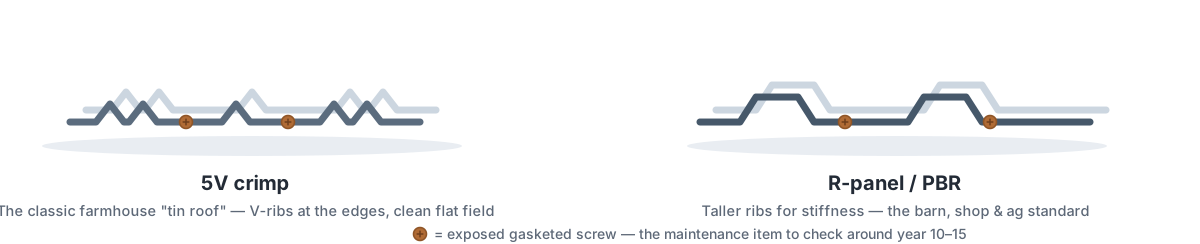
| 5V crimp | The traditional farmhouse panel — two V-ribs at each edge, clean flat field | Farmhouses, historic looks, porches, homes |
| R-panel / PBR | Taller ribs, more structural stiffness | Barns, shops, ag and commercial buildings |
| Tuff-rib / ribbed | Economy ribbed pattern | Sheds, outbuildings, budget projects |
All of them install with gasketed screws through the panel face — which is why they cost meaningfully less than standing seam, and why the screws are the part to take seriously.
The honest maintenance conversation
Exposed-fastener roofs have one long-term duty standing seam doesn't: the gaskets under those screws age in the sun. Ask anyone who owns one: those who knew going in treat it like servicing a well pump; those who didn't met a "mystery" leak.
- The schedule: a fastener check around years 10–15 — re-seat or replace a fraction of screws — then periodic. An afternoon of maintenance per decade in exchange for thousands saved up front.
- Also on the schedule: the foam closure strips under ridge and eave trim compress and crumble over the years. Cheap to replace, easy to forget.
- The fine print: no manufacturer offers a weathertight warranty on any exposed-fastener system — watertightness rides on installation quality and upkeep.
- The counterpoint: home inspectors report screws rarely end a roof's life; panels and flashing usually decide it. True — of maintained roofs.
Anyone who sells you a screw-down roof without this conversation is leaving out the one thing you should know.
Specs that matter on a 5V roof
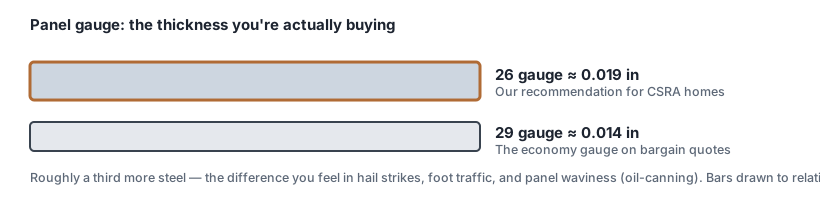
- 26-gauge over 29-gauge. The economy gauge dents in hail and walks poorly. The price difference is small; the durability difference isn't.
- Quality long-life fasteners. Screws with EPDM washers and a coating matched to the panel — cheap screws are how good roofs fail early.
- Bare Galvalume or painted? Bare Galvalume is the budget-honest barn finish — decades of service, ages to a soft matte. For homes, a PVDF painted finish keeps its color in Georgia sun.
- Fastening schedule followed exactly. Wind ratings assume the manufacturer's screw pattern. Storm performance is decided on install day, not in the brochure.
Barns, ag buildings & barndominiums
A working barn roof in the CSRA needs three things: panels that handle span over purlins, condensation control, and a price that makes sense across a few thousand square feet. R-panel over purlins with a condensation barrier (felt-backed panels or a vapor underlayment on enclosed buildings) is the standard answer. For barndominiums — more of them going up in the rural counties every year — the roof is the building, so we treat it like a house: sealed details, proper underlayment on decked sections, and insulation planning that prevents the "barn sweat" that ruins stored equipment and finished interiors alike.
One warranty fact every livestock owner should hear before buying panels: Galvalume substrate warranties typically exclude enclosed animal-confinement buildings — the ammonia atmosphere over manure is corrosive to the coating — along with coastal salt and chemical exposure. Open-air and well-ventilated ag buildings are generally fine; an enclosed hog, poultry, or cattle barn needs a ventilation plan and the right panel spec, not a brochure promise. We'll walk that through honestly rather than learn it together in year eight.
What it costs
Exposed-fastener systems in the Augusta area typically run ~$7–$12 per square foot installed on homes; large simple-span ag buildings can land below that range per foot. The full breakdown — gauges, finishes, and what moves the number — is in the Augusta cost guide.
House, barn, or barndo — get a real number
Free estimates anywhere in the CSRA. Rural properties welcome — distance isn't a problem for ag work.
Call (706) 222-3651 Request an Estimate5V & farm roofing questions
Is this the same thing as a "tin roof"?
That's the name everyone's grandmother used, and the look is the same — but actual tin hasn't been on roofs in a century. Modern "tin roofs" are Galvalume-coated steel: far stronger, rust-resistant, and available bare or factory-painted. If you loved the roof on the old family farmhouse, 5V crimp is that roof, built better.
How long does a 5V crimp roof last?
With sound fastening and the occasional screw service, 40+ years is normal — plenty of CSRA farmhouses are proof. Panel finish is usually what ages first: bare Galvalume goes matte gracefully; painted PVDF holds color for decades.
Is bare Galvalume okay, or should I pay for painted panels?
On barns and outbuildings, bare Galvalume is a perfectly good lifetime choice and the best dollar value in metal roofing. On homes, painted panels earn their cost in looks and finish warranty. There's no wrong answer — just match the building.
What's the difference between a barn roof and a house roof install?
Substrate and sealing. Barns typically take panels over open purlins with condensation control; houses get solid decking and underlayment with full flashing detail. Same panels, different system underneath — and different prices per foot.
Why do my current screws have rust rings around them?
Aged gaskets letting water sit at the screw head, or mismatched cheap fasteners reacting with the panel. It's the classic serviceable failure of older screw-down roofs — caught early, it's a fastener service; ignored for years, it becomes panel replacement.
Do you roof barndominiums under construction?
Yes — and the earlier we're in the conversation, the better the roof system fits the build (purlin spacing, underlayment plan, insulation approach all interact). Bring us the plans and we'll spec it with your builder.