What Does a Metal Roof Cost in Augusta, GA? (2026 Guide)
The short answer for the CSRA: most exposed-fastener metal roofs land around $7–$12 per square foot installed, standing seam around $12–$18+, and a typical 1,800 sq ft roof comes out somewhere between $14,000 and $28,000. The long answer — what actually moves your number and how to compare quotes without getting burned — is the rest of this page.
Installed price ranges in the Augusta area
| Roof system | Typical installed range | Where it fits |
|---|---|---|
| 5V crimp / R-panel (exposed fastener) | ~$7–$12 / sq ft | Farmhouses, ranches, barns, budget-smart re-roofs |
| Standing seam (concealed fastener) | ~$12–$18+ / sq ft | Primary residences, new builds, premium re-roofs |
| Architectural shingles (for comparison) | ~$4.50–$7 / sq ft | Lower up front; 15–20 year life in Georgia sun |
These are honest regional ballparks, not quotes. Steeper pitches, complex rooflines, tear-off, and decking repairs push toward the top of each range; simple gable roofs at walkable pitch sit near the bottom.
The seven things that move the number
- Roof size and pitch. Materials scale with square footage; labor scales with pitch. Anything above an 8/12 pitch slows the crew down and adds safety setup.
- Tear-off vs. going over shingles. Removing old shingles adds labor and disposal fees (and reveals the decking's true condition). In many cases metal can be installed over a single shingle layer, which trims cost meaningfully.
- Panel profile. Exposed-fastener panels are quicker to make and install; standing seam costs more in both material and labor but eliminates exposed screws entirely.
- Gauge. 26-gauge steel costs a bit more than bargain 29-gauge and is worth it in our hail-and-limb climate. Big-box and storm-chaser quotes are usually 29-gauge — compare apples to apples.
- Paint system. A PVDF (Kynar-type) finish resists fade and chalking in full Georgia sun far longer than economy polyester (SMP) coatings. Cheap finish is where a low quote often hides.
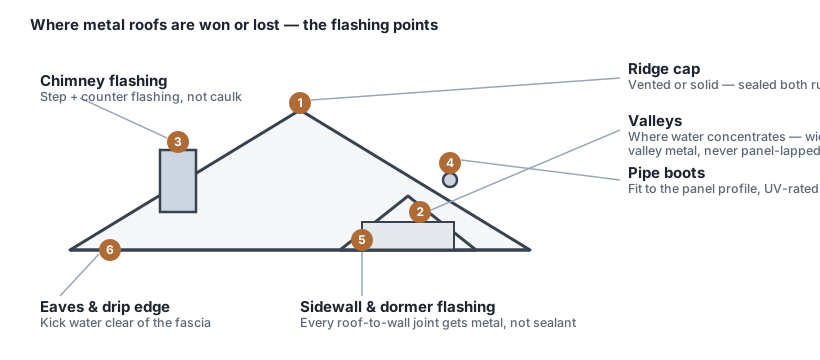
- Trim, flashing, and penetrations. Valleys, chimneys, skylights, and dormers all add detail work. This is where metal roofs are won or lost — and where corner-cutters cut.
- Decking repairs. Rotten or delaminated decking found during tear-off gets replaced by the sheet. A fair contract prices this per-sheet up front instead of springing it mid-job.
Example projects (illustrative, CSRA-typical)
| Project | System | Ballpark installed |
|---|---|---|
| 1,500 sq ft brick ranch, walkable pitch, simple gable | 5V / R-panel, 26 ga | ~$11,000–$16,000 |
| 1,800 sq ft two-story, moderate complexity | Standing seam, PVDF | ~$22,000–$30,000 |
| 2,400 sq ft farmhouse + 1,200 sq ft barn | 5V house, R-panel barn | ~$22,000–$32,000 combined |
Your roof will differ — that's the point of a free, measured estimate. These exist so a real quote has context.
Metal vs. shingles: the 40-year math
Architectural shingles in our sun and humidity commonly need replacing in 15–20 years. Over the 40–70 year life of one metal roof, a shingle house typically buys two to three roofs — each at that decade's prices, each with its own tear-off and disposal. Then there are the three quieter line items most quotes never mention:
- Insurance. Many carriers discount premiums for UL 2218 Class 4 impact-rated roofing — published cases run from single digits up to ~25–30% in hail-prone states (one widely shared example: a 26% discount worth ~$500/year). Georgia carriers vary widely; the Class 4 panel upgrade is cheap at order time, so ask your agent before you pick panels. One caution from the fine print: some policies exclude cosmetic hail denting on metal — ask about that too.
- Cooling. Reflective "cool roof" finishes reflect a large share of solar energy — utility field studies measured white and light metal reflecting on the order of two-thirds of the sun's energy, and DOE/Oak Ridge research backs meaningful cooling-load reductions in hot climates. In a cooling-dominated market like Augusta, a reflective finish is one of the few roof choices that pays you back monthly.
- Resale. Honest numbers: you won't see dollar-for-dollar back at closing — studies put immediate recoup around 60–86%. What metal does do is make the listing more attractive: educated buyers know what it's worth, and an agent worth their salt sells the feature hard. Just don't bank on a higher price because you installed it — the full dividends pay whoever stays.
How to read your quotes (from anyone, including us)
- Itemization. Panel profile, gauge, paint system, underlayment type, trim package, fastener schedule, decking-repair rate — in writing. A lump sum hides substitutions.
- Gauge and finish in the contract. "Metal roof" can legally mean 29-gauge polyester. Make the quote say 26 ga / PVDF if that's what you're comparing.
- Who's actually on the roof. Ask whether the crew is the company's own or a sub picked up for the job, and who handles warranty service in year five.
- Warranty split. Paint/substrate warranties come from the panel manufacturer; workmanship warranty comes from the installer. Get both in writing — they cover different failures.
- Storm-chaser check. After hail events, out-of-town crews canvass CSRA neighborhoods. A local address history and a number that still answers in February beat a door-knock discount.
Want a real number instead of a range?
Free on-site estimate anywhere in the CSRA — measured, itemized, and explained in plain English.
Call (706) 222-3651 Request an EstimateCost questions, answered straight
Why do metal roof quotes vary so much between contractors?
Usually gauge, paint system, and trim detail — the three things homeowners can't see in a bid line called "metal roof." A 29-gauge polyester roof with minimal trim legitimately costs thousands less than a 26-gauge PVDF roof with full flashing detail. Neither quote is dishonest; they're different products. Make every bidder specify all three.
Is going over my shingles cheaper than tear-off?
Typically yes — you save the tear-off labor and disposal fees, often $1–2 per square foot. Whether your roof qualifies depends on layers, decking condition, and local code. Full breakdown here.
Does insurance really discount metal roofs?
Many carriers offer premium credits for UL 2218 Class 4 impact-rated roofing, and some adjust for new roofs generally. It varies by carrier and policy — worth a call to your agent before you choose panels, since the Class 4 upgrade is cheap at install time.
Is standing seam worth the premium over 5V?
On a primary residence you plan to keep: usually, yes — no exposed fasteners means no gaskets to age in the sun, and the clean look carries resale value. On barns, sheds, and budget re-roofs, 5V's value is hard to beat. Standing seam details / 5V details.
When's the best time of year to re-roof in Augusta?
Crews work year-round here — winters are mild. Spring and early summer book up fastest (storm season has people thinking about roofs), so fall and winter scheduling is often easier and occasionally sharper on price.
Ranges current as of mid-2026 for the Augusta / CSRA market and reviewed periodically. Material prices move with steel markets; a measured quote is always the real answer.